File Organization
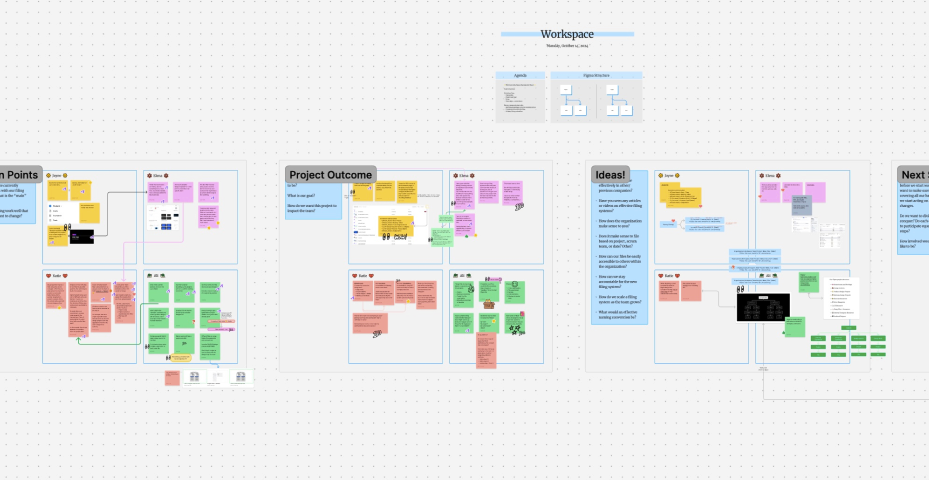
Project Overview
As the design team at Stukent grew from a single designer to a team of five, our existing file organization system no longer supported efficient collaboration or scalability. What had once been a workable solo setup became difficult for designers, engineers, and stakeholders to navigate, leading to inconsistencies, duplicated work, and friction during handoff.
I led this project as both the designer and project manager, with the goal of creating a clear, scalable file organization system that enabled stronger collaboration across the design team and improved transparency for cross-functional partners. The initiative focused on defining how files were named, where they lived, and how new files were created, ensuring consistency and clarity as the team continued to grow.
Requirements
Early discovery highlighted the need for a system that was intuitive, scalable, and easy for both designers and non-designers to understand. Key requirements included:
A standardized file naming convention that clearly communicated project purpose and status.
A logical folder structure that made it easy to locate current work, archived files, and shared resources.
Reusable templates for new files to ensure consistency from project kickoff through handoff.
Clear ownership and visibility so stakeholders knew where to find design artifacts.
A system that supported efficient engineering handoff and reduced back-and-forth during implementation.
These requirements ensured the solution would improve day-to-day workflows while supporting long-term team growth.
Research
To inform the structure, I conducted interviews with designers, engineers, product managers, and other stakeholders to understand pain points and expectations. Common challenges included uncertainty around which file was “the source of truth,” inconsistent naming conventions, and difficulty finding the most up-to-date designs.
I also reviewed best practices from other product design teams and examined how larger organizations structured their design files. This research helped identify patterns that balanced flexibility with clarity, while still aligning with Stukent’s workflows and tooling.
Wireframe
Instead of traditional UI wireframes, this project focused on a gantt chart. I mapped out proposed folder structures, naming conventions, and file templates using diagrams and documentation to visualize how designers and stakeholders would navigate the system.
I created standardized file templates that included pre-defined pages for discovery, flows, wireframes, and final designs. Each template also contained guidance on naming, versioning, and handoff expectations, helping designers onboard quickly and work more consistently across projects.
These artifacts served as both design documentation and training tools for the team.
Iterations
The process followed a collaborative, iterative approach with continuous stakeholder involvement. I shared early proposals with the design team to validate usability and identify gaps, then refined the system based on feedback. As the structure evolved, I reviewed it with engineers and product partners to ensure it supported handoff workflows and cross-functional collaboration.
Feedback loops focused on improving clarity, reducing ambiguity, and minimizing friction during real project work. Iterations addressed questions such as where exploratory work should live, how to archive completed projects, and how to distinguish in-progress designs from approved deliverables.
This collaborative process ensured the system worked not just in theory, but in practice.
Final
The final file organization system provides a scalable foundation for design collaboration at Stukent. It includes a clear folder hierarchy, consistent naming conventions, and standardized templates that support projects from discovery through handoff.
Designers can now collaborate more efficiently, quickly understand each other’s work, and onboard with minimal ramp-up time. Stakeholders know exactly where to find design artifacts, and engineers have a reliable source of truth during the handoff phase.
By creating a shared structure and language around design files, this project improved team efficiency, reduced friction, and established a system that can continue to scale alongside the design team.