Integrated Marketing Communications Simulation
Project Overview
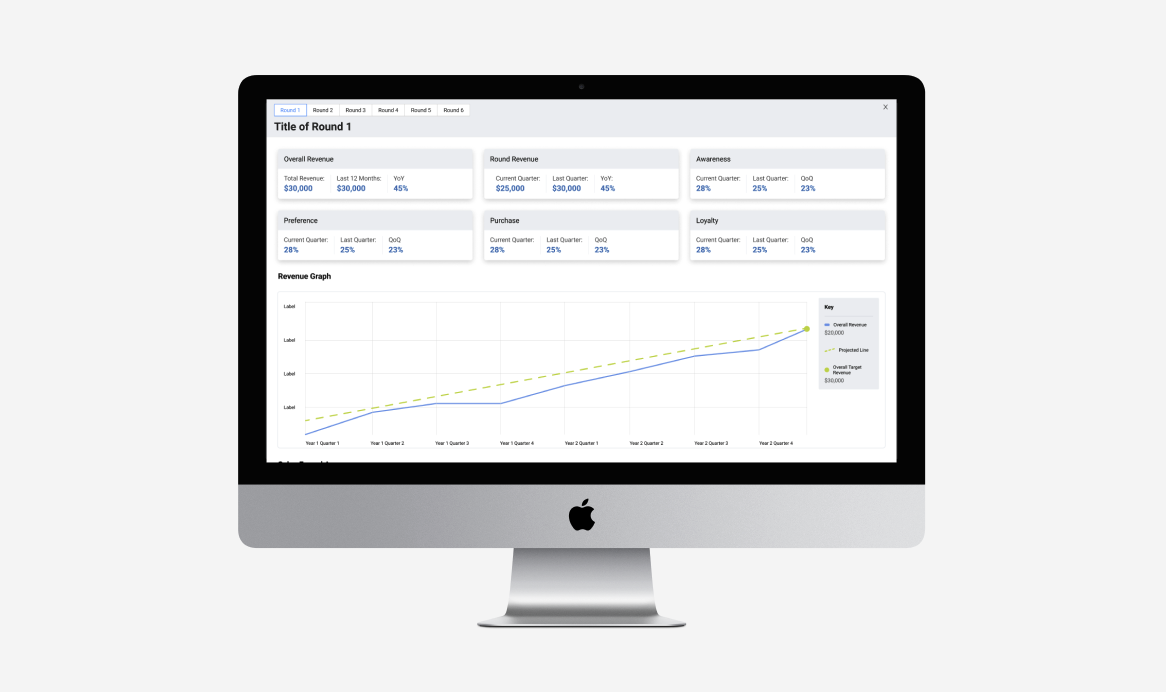
The Integrated Marketing Communications Simulation is an immersive learning experience designed to teach marketing professionals how to create cohesive, cross-channel communication strategies. The product simulates the role of a marketing manager tasked with launching and promoting a product line. They must make strategic decisions across multiple platforms and create a strong connection with their customers.
My role as the user experience lead designer was to transform broad instructional objectives into an interactive, branching experience that demonstrates how unified messages drive a successful campaign. I collaborated with product managers, instructional designers, content specialists to design intuitive flows, validate decisions, and deliver a simulation that reflect real-world marketing challenges.
Requirements
Discovery sessions revealed several core needs for the simulation:
Branching Interaction Systems: Users needed a flexible decision-making activity where choices affected their campaign performance, target audience, and channel alignment.
Platform-Specific Decisions: Users needed to be presented with context-specific choices for channels such as email, social media, and digital ads.
Unified Campaign Strategy: Users needed to how to select appropriate audience segments and align messages accordingly.
Progressive Storyline: Users were taken on a journey to show a productive campaign evolving. They initially prompted a product and grew the campaign to measure success.
Scenario Feedback: Users needed personalized feedback at the end of each scenario explaining how their decisions impact results and how to improve the next scenario.

Research
Before I began, I partnered with marketing subject matter experts and conducted both competitive and visual research.
In order to create an initiative experience, I needed to analyze how integrated marketing communications works so that I could understand the journey marketers take to relate to their customers.
My research highlighted that users benefit from the simulation the most when they can clearly see their relationship between their decisions and overall effectiveness of the campaign.
Wireframe
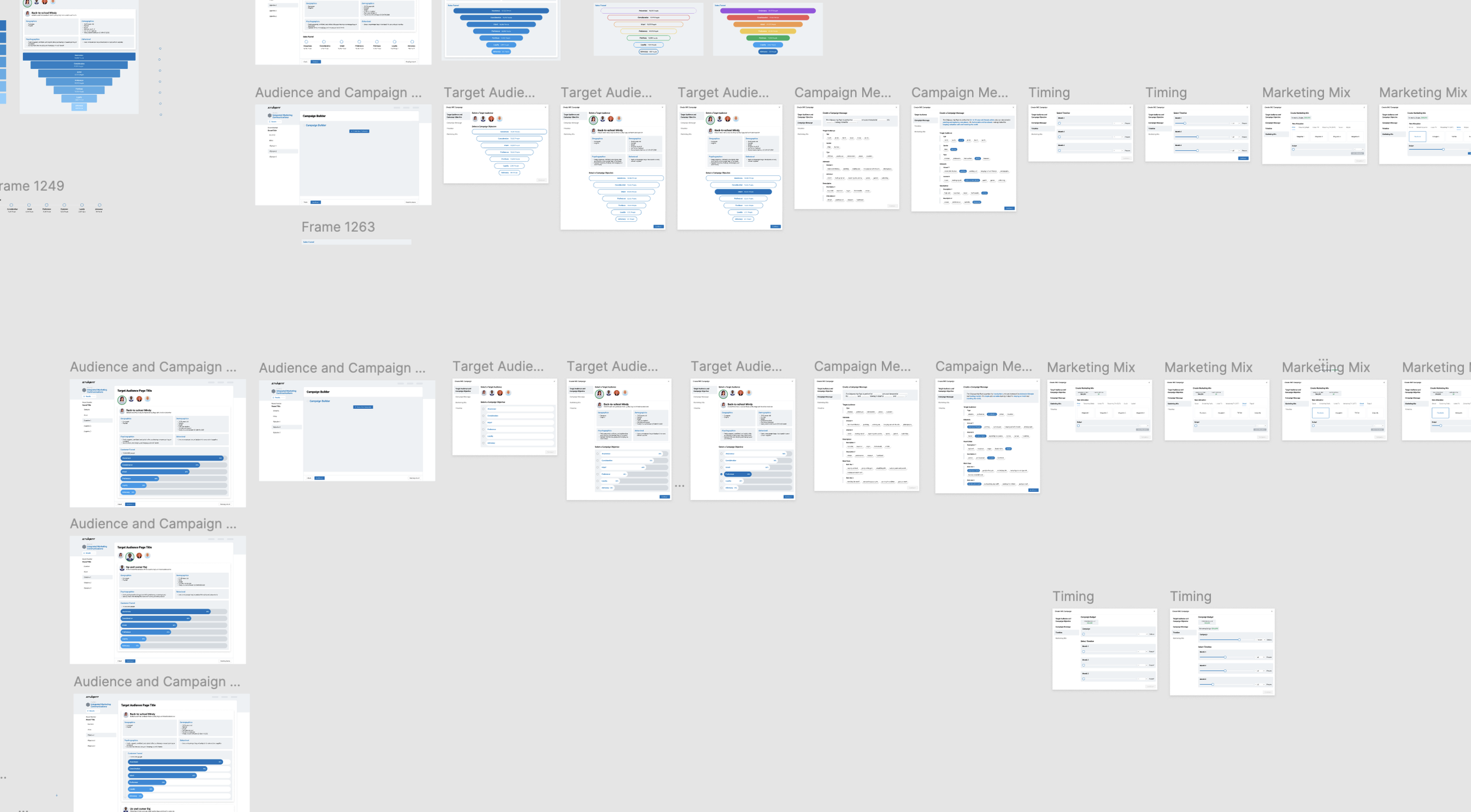
I began with a low-fidelity wireframe focused on the decision-making flow. The modal-based layout allowed users to select channels, create messages, and get feedback. I tested the wireframes with our subject matter expert to ensure the interactions accurately mirrored real challenges and users would grasp the strategy behind integrated marketing communications.
Final Design
The final Integrated Marketing Communications Simulation delivers an engaging, story-driven experience that puts users in control of their marketing trajectory. There is a rich branching system where each decision shapes an evolving campaign, context-specific platform choices, audience targeted decisions, and dynamic storyline, and end of scenario feedback.
The final product offers a meaningful way for users to practice integrated marketing communication skills, reinforcing how thoughtful decisions lead to a successful and unified campaign.