Professional Sales Simulation
Project Overview
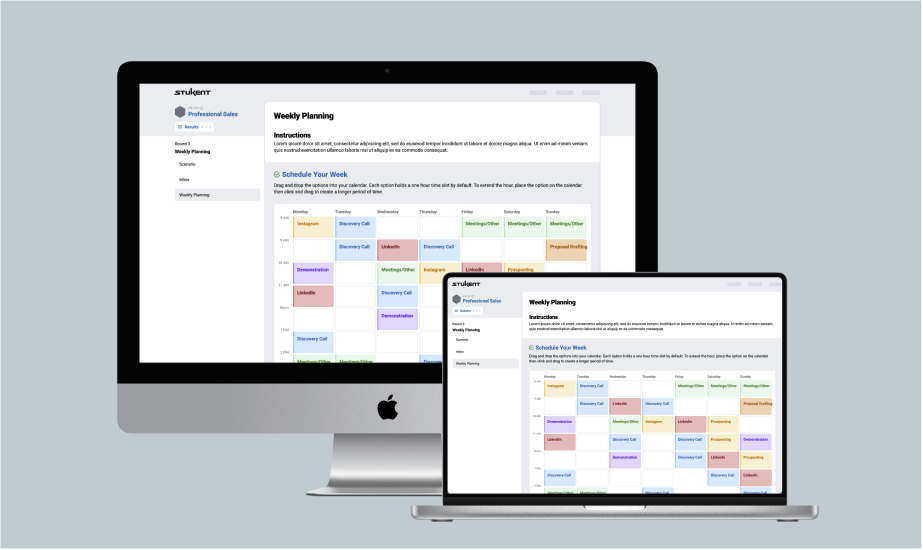
The Professional Sales Simulation is a simulation by Stukent Inc, designed to give students a immersive training experience for new and experienced sellers strengthen their skills at decision-making, communication, and time management. The product simulates a realistic day in the life of a sales representative asking users to manage their schedule, make outbound calls, respond to dynamic scenarios, and ultimately review their performance on a results dashboard.
My role was to take an early concept and transform it into a structured, intuitive, and engaging simulation. I worked closely with product managers, instructional designers, and software engineers to define requirements, validate user needs, design the flow, and deliver a cohesive experience that aligns with learning outcomes.
Requirements
Early discovery sessions revealed the need for the simulation to support several core learning interactions:
Daily Schedule Management: Users needed to plan and adjust their tasks within a simulated sales calendar day, including meetings, preparation time, and outreach.
Making Calls: Users needed to simulate real-time sales conversations with various outcomes based on their choices.
Decision-Making Scenarios: Users needed to make strategic choices that impact customer outcomes.
Performance Dashboard: Users needed results summarizing their call success rate, time allocation, decision impact, and feedback on how to improve.
Research
I conducted qualitative research and collaborated with subject matter experts to understand real-world sales workflows. This included reviewing existing softwares sales representatives use in their day to day work, researching competitor simulations to identify patterns, and user feedback sessions.
The research revealed the learners struggle with time management and prioritization. Users valued clear feedback that connects to actions they’ve made. These results influenced me on both the interface and the results dashboard.
Iterations
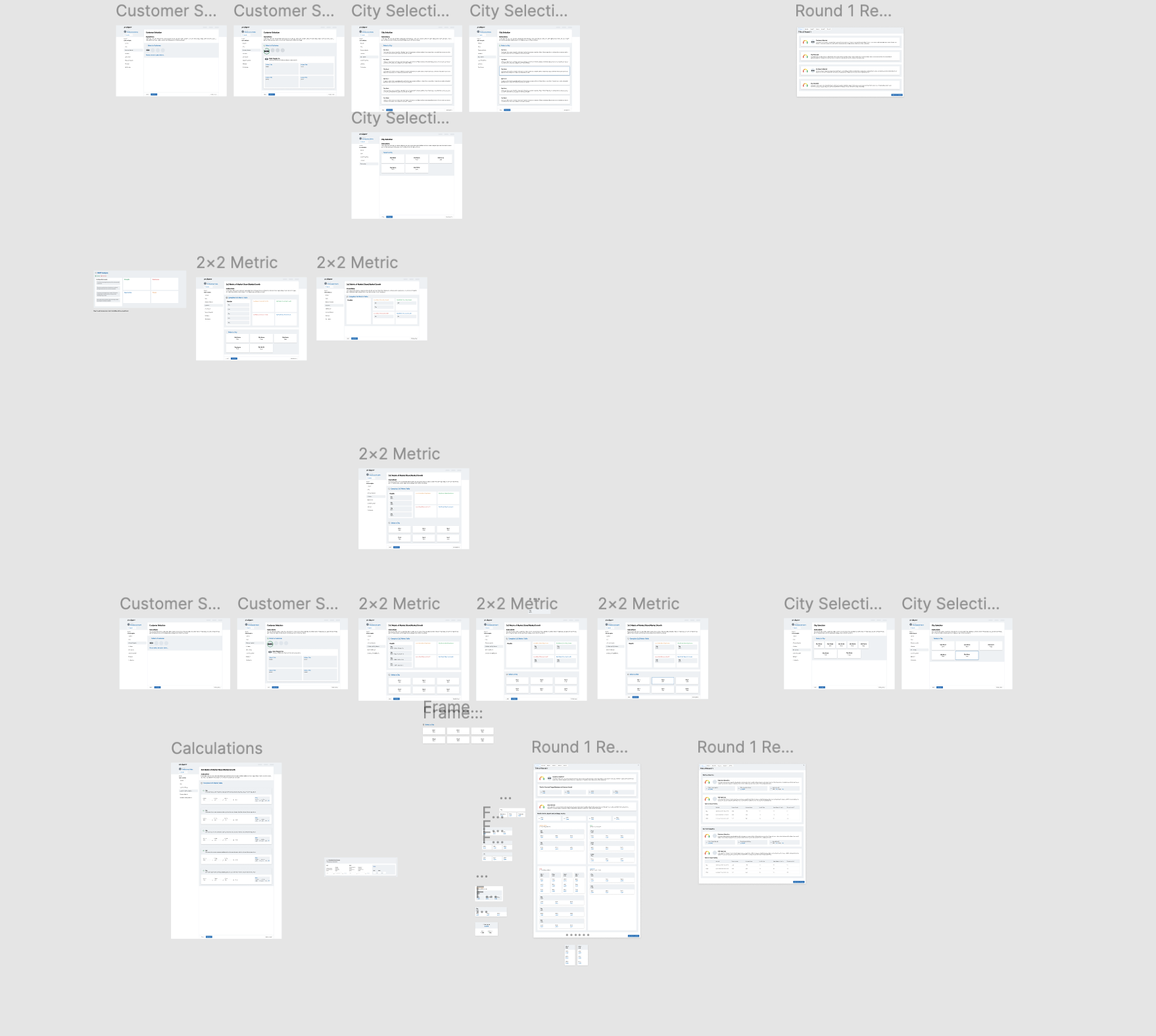
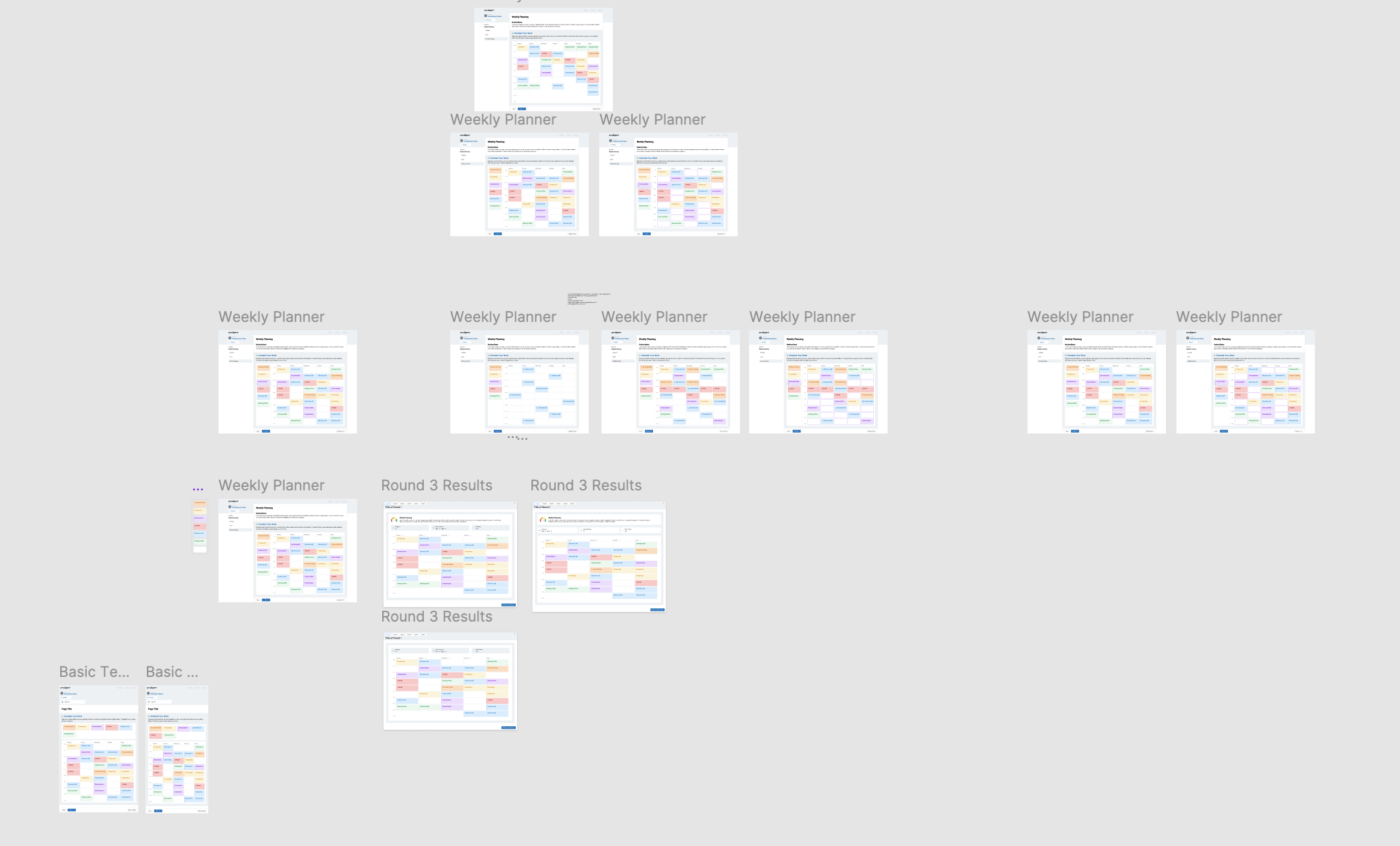
I sketched initial concepts and transitioned designs into low-fidelity wireframes focused on validating our core concepts.
Feedback from testing and stakeholder reviews revealed several challenges that required an iterative approach. Each iteration helped reduce friction, improve learning objectives, and create a more polished user-centered experience.
Final Design
The final experience is a structured, interactive simulation that closely mirrors the real-world pattern of a professional sales representative’s day.
The following design includes:
A clean, timeline-based schedule that enables intuitive prioritization and feedback
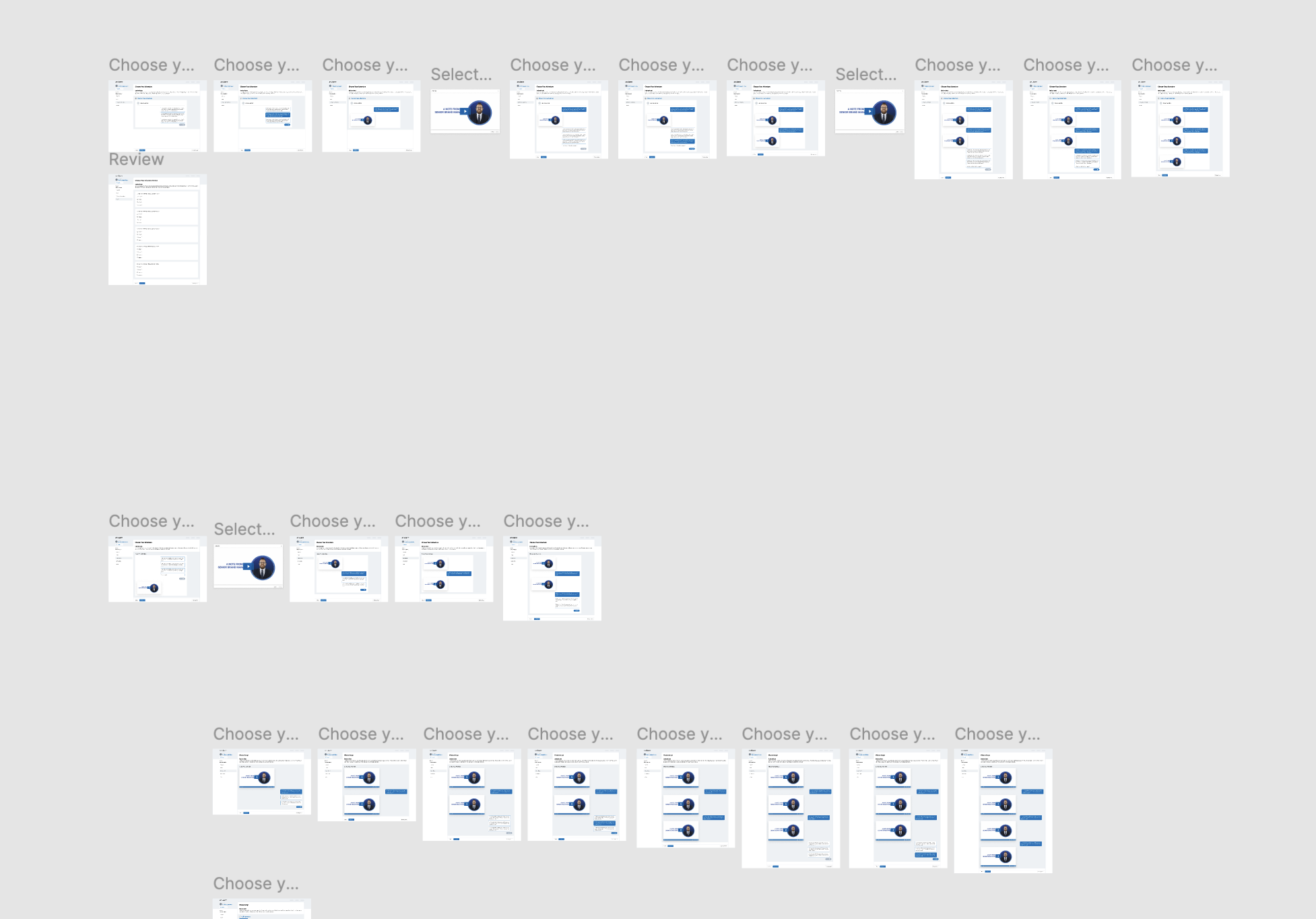
Dynamic call feature that branches user’s choices
Decision-making scenarios with clear prompts and feedback
A comprehensive and friendly dashboard to visualize performance
The final product provides users with a safe space to practice, iterate, and reflect. In result users can gain confidence in simulated situations before stepping into real-world scenarios.